


Wedding Stationery 101: What Is Included in a Wedding Invitation Suite (+ Every Term Explained)
October 20, 2026
If you’ve ever started looking into wedding invitations and felt like everyone else got a handbook you didn’t… you’re in good company. Belly bands, details cards, deckled edges, debossing. It’s a whole new language, and most couples are learning it while planning everything else at the same time. So let’s start with the question I hear more than any other: what is included in a wedding invitation suite? I’ve been designing custom wedding invitations since 2018 for more than 200 couples, so after we cover the suite itself, I’m walking you through every other term you’ll hear along the way. Think of this as your cheat sheet.
Here’s what we’re covering:
- What is included in a wedding invitation suite
- The finishing touches: belly bands, vellum wraps, wax seals, and guest addressing
- Printing methods, explained by how they feel
- Paper terms worth knowing
- Day-of wedding stationery (and the escort card vs. place card mix-up)
- From first proof to your mailbox
- Your wedding invitation suite questions, answered
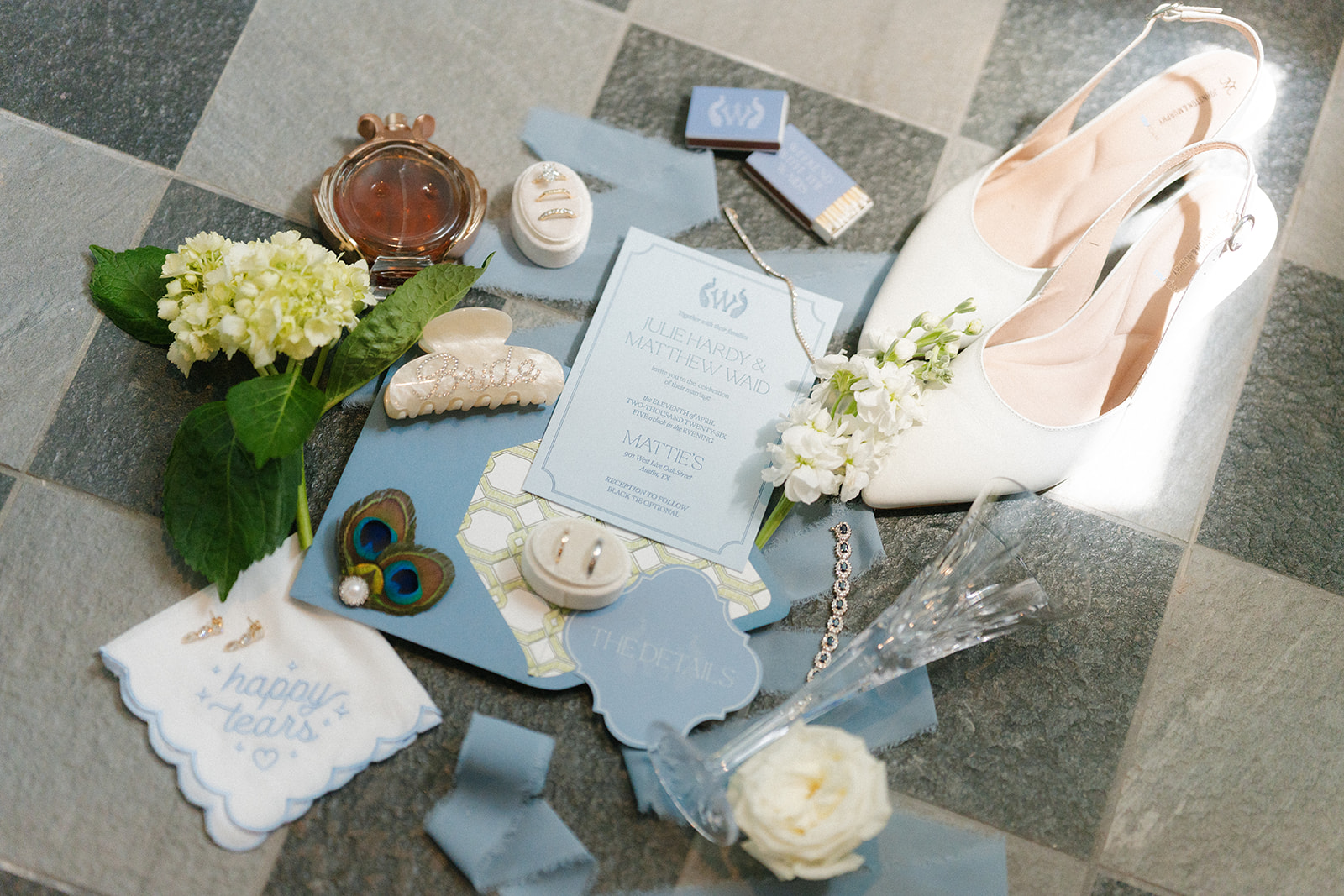
Photography by Simon Anthony
What Is Included in a Wedding Invitation Suite?
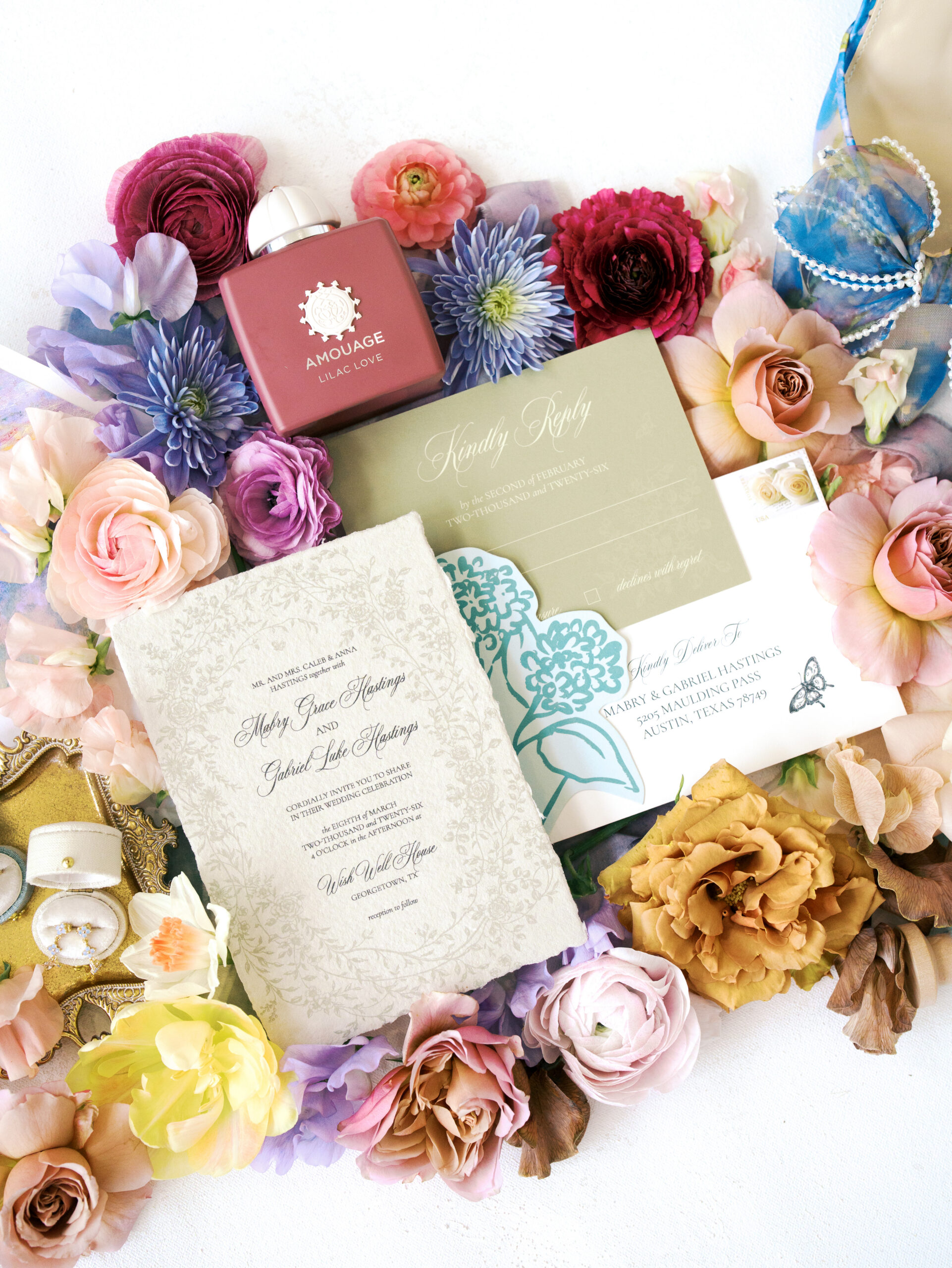
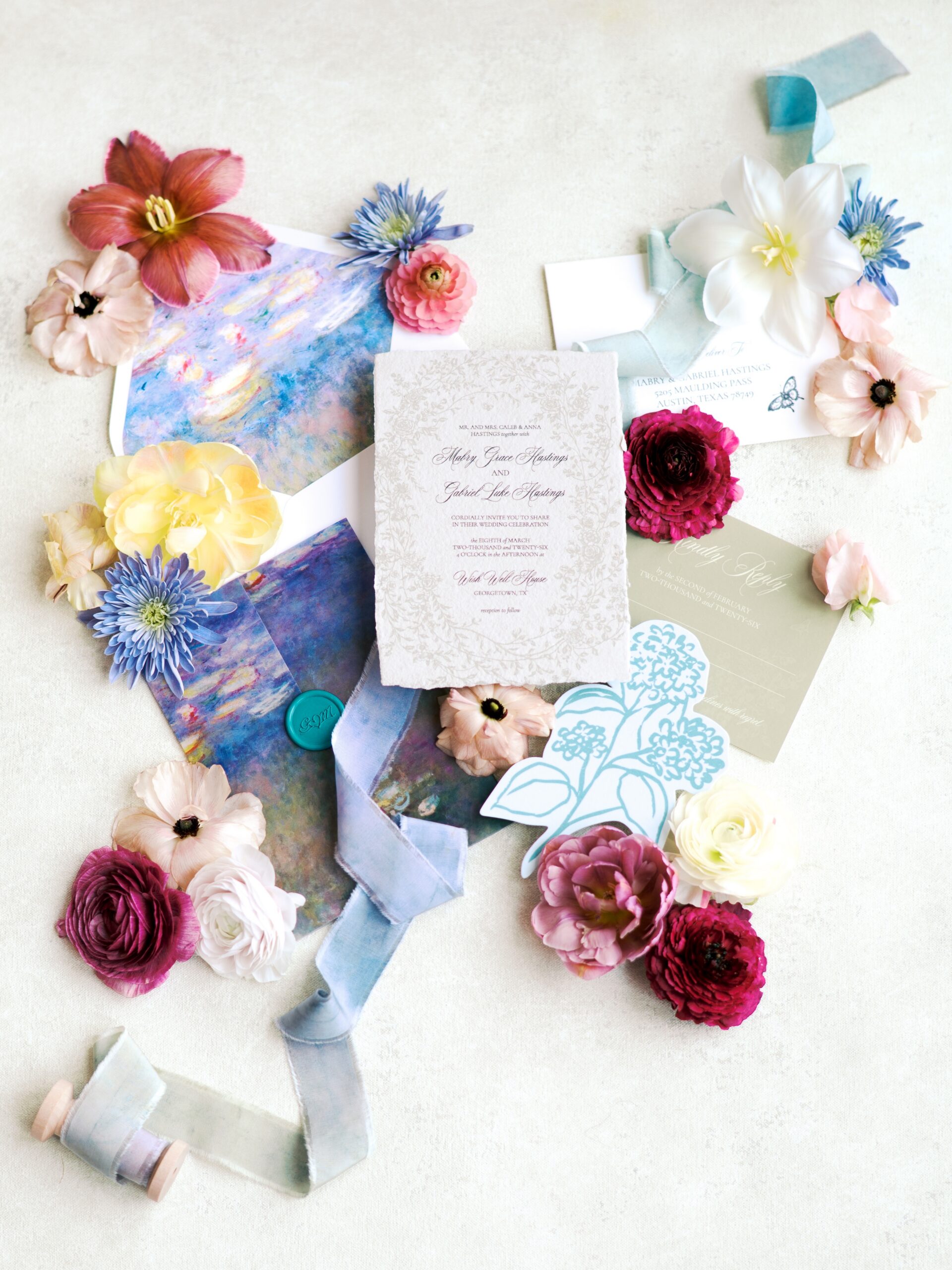
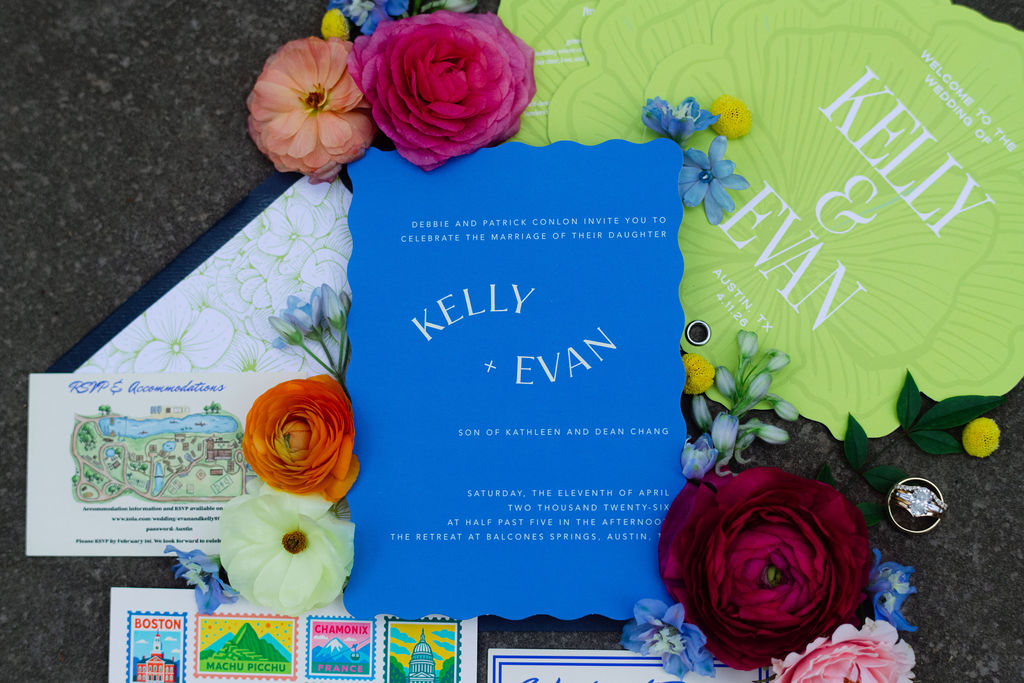
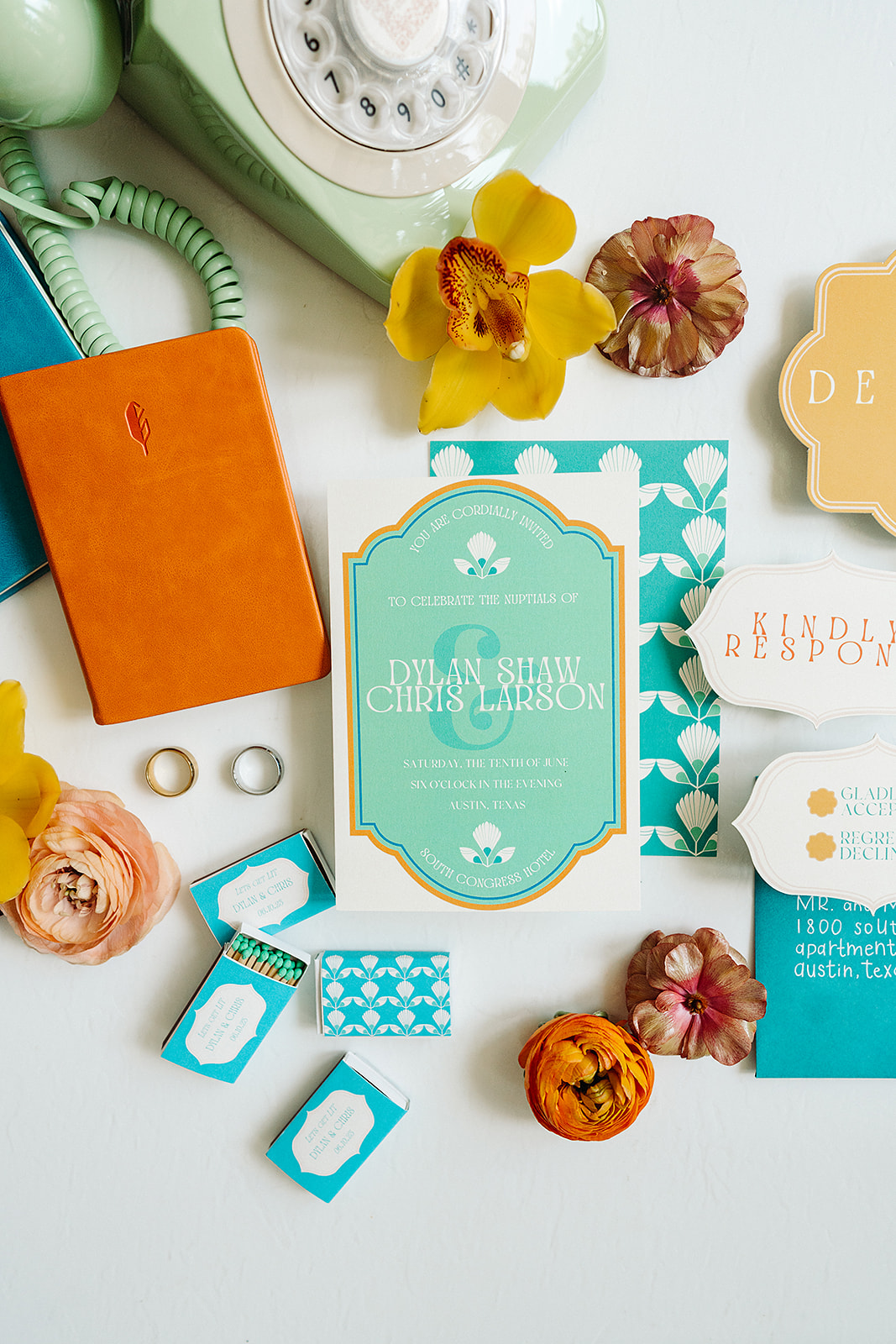
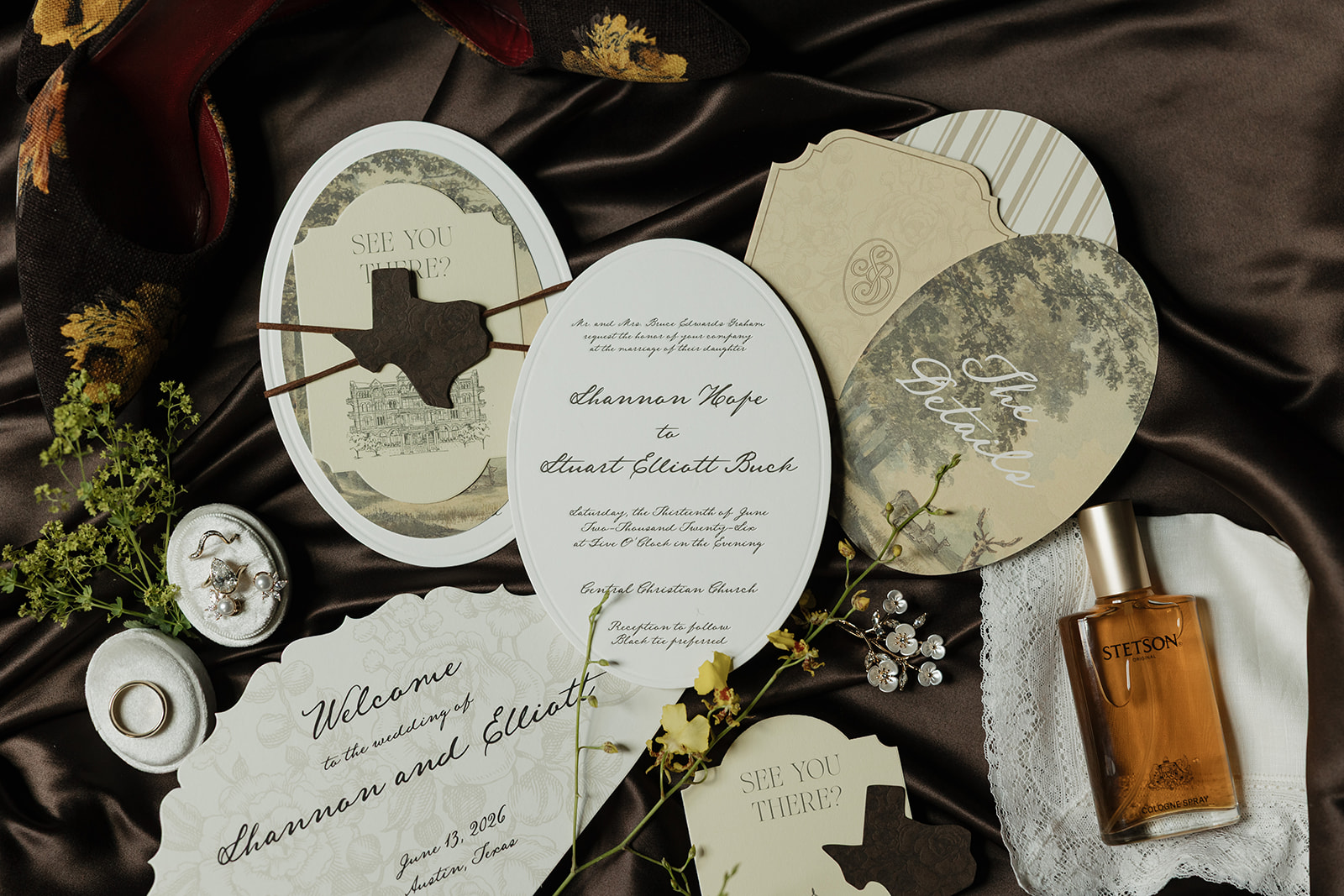
A wedding invitation suite is the coordinated set of stationery your guests receive in the mail. At its simplest, it includes the main invitation, a details card, a way for guests to RSVP, and the envelope it all arrives in. From there, you can add finishing touches like envelope liners, belly bands, vellum wraps, and wax seals to make opening it feel like an experience.
No two weddings are alike, so no two suites we design look exactly the same. Here’s what each piece actually does.
The Main Invitation
This is the star of your suite. It shares the must-know details: who’s hosting, your names, the date and time, and where your ceremony is happening. If your reception is at the same place, a simple “reception to follow” usually covers it. Everything else in your suite is designed around this piece, so it sets the tone for your wedding before a single guest arrives.
The Details Card
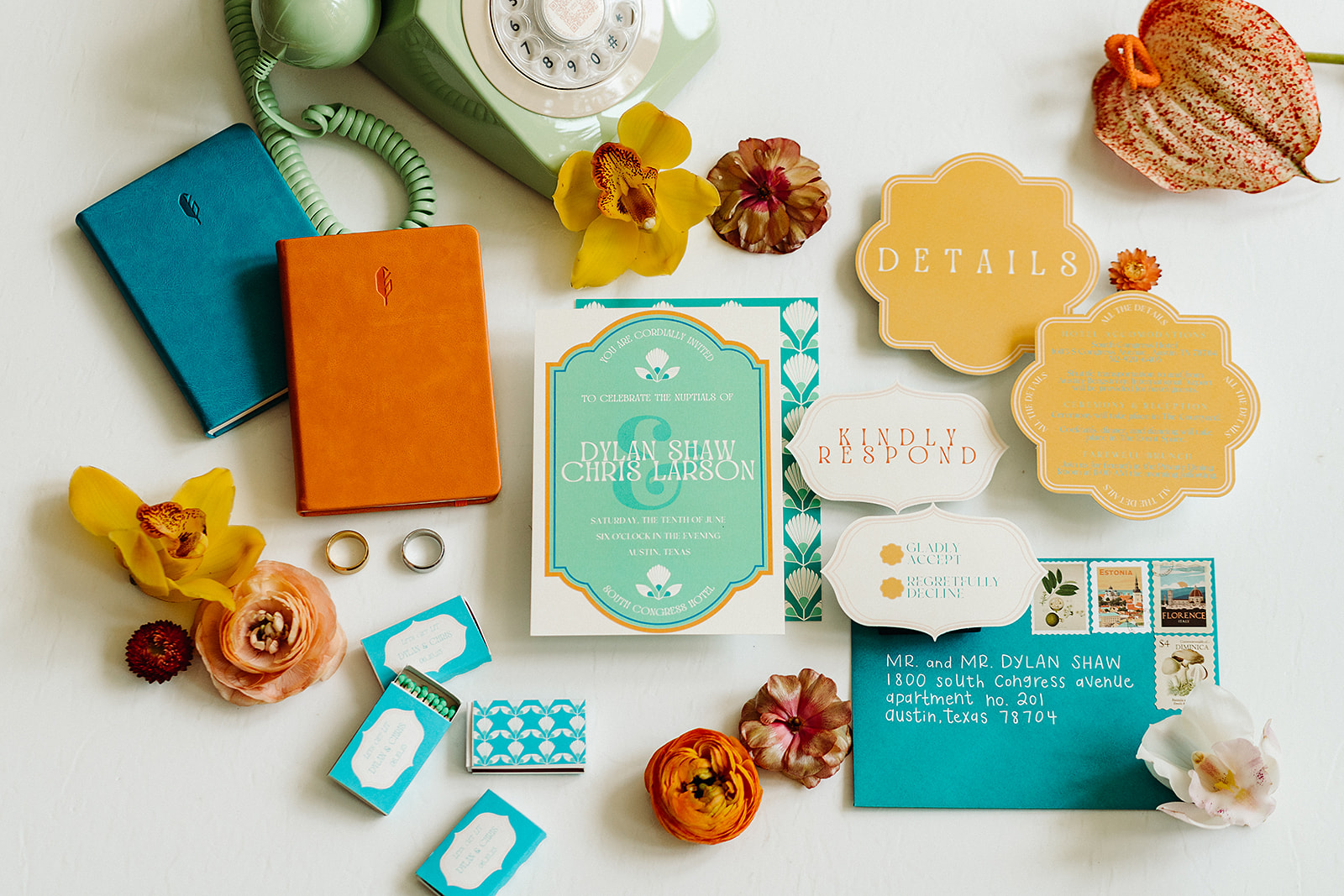
The details card (sometimes called an insert or enclosure card) holds everything that would crowd your invitation: hotel blocks, transportation, dress code, and your wedding website. It’s where guests go to figure out the logistics, so we keep it clear, easy to read, and designed to match the rest of your suite.
The RSVP Card (and My Honest Take on It)
A traditional RSVP card, or response card, is a small card guests fill out and mail back to you. It usually comes with its own pre-addressed, pre-stamped envelope so replying is easy for them.
Here’s my take…most couples don’t need a mail-back RSVP anymore. So many of our couples collect RSVPs through their wedding website, which means we can combine that info right onto your details card. You save on the extra card, the return envelope, and the postage you’d be providing so every guest can mail it back. It’s one of the easiest ways to simplify your suite without it feeling like anything is missing.
The Outer Envelope and Inner Envelope
The outer envelope is the one that travels through the mail. It carries your guest’s name and address, your return address, and postage.
The inner envelope is a second, unsealed envelope that sits inside the outer one. It’s a more traditional, formal touch, and it lists exactly who’s invited by name. It’s completely optional, but it can be helpful if you want to be clear about plus-ones or whether kids are included.
Envelope Liners
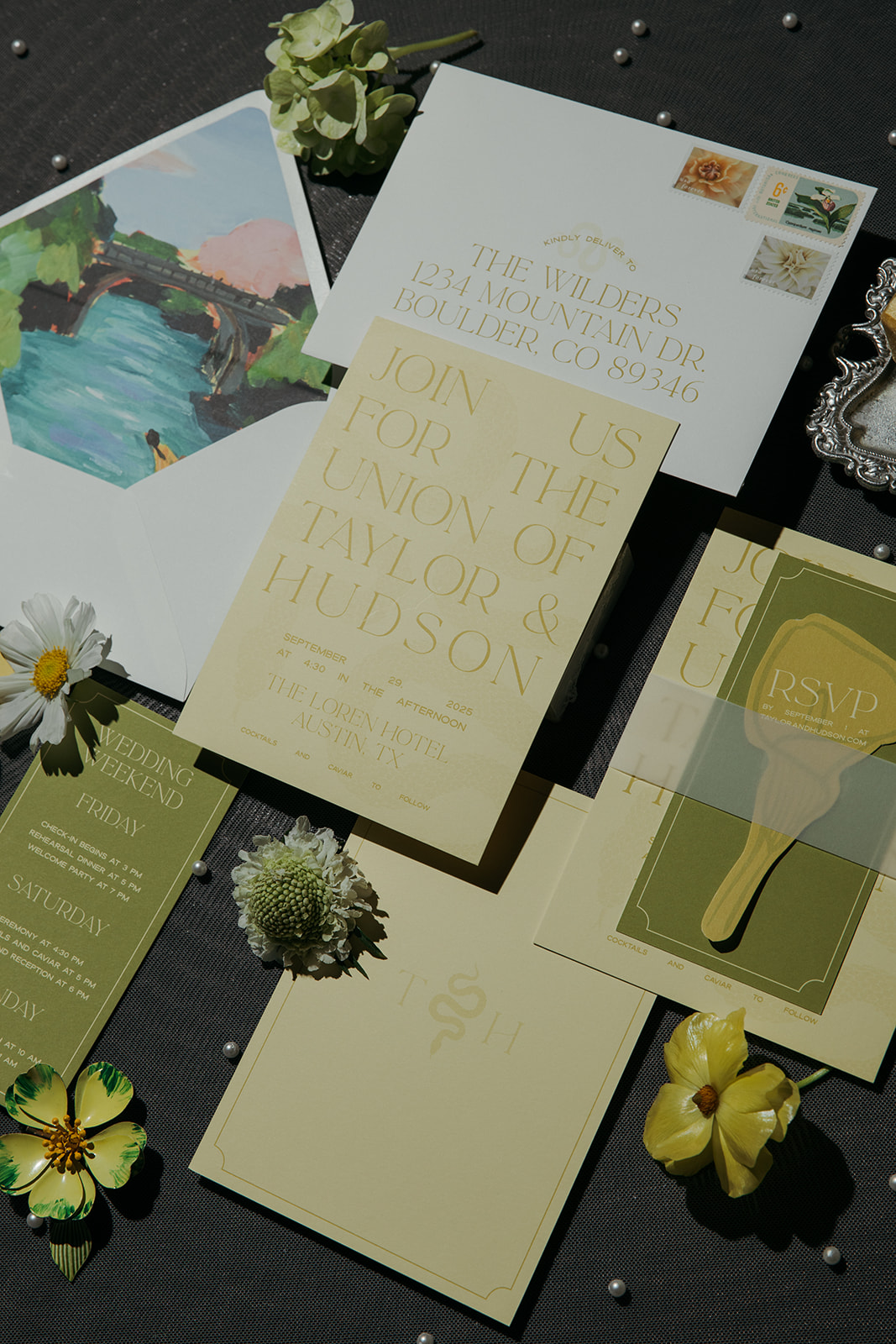
This is one couples ask about all the time! So, what is an envelope liner? It’s a thin piece of decorative paper that lines the inside of your envelope, so when a guest lifts the flap, there’s a pattern, color, or illustration waiting for them. It’s a small detail, but it’s usually the very first thing your guests see.
Save the Dates
Your save the date isn’t actually mailed with your suite. It goes out first, usually 6 to 10 months before your wedding, so guests can mark their calendars and start making travel plans. Your invitation follows later, typically 2 to 3 months before the big day. Even though they’re mailed separately, we love designing your save the date to set up the look and feel of the invitation that comes next. If you want the full save the date vs. invitation timeline, our guide on what to order and when walks through it step by step.
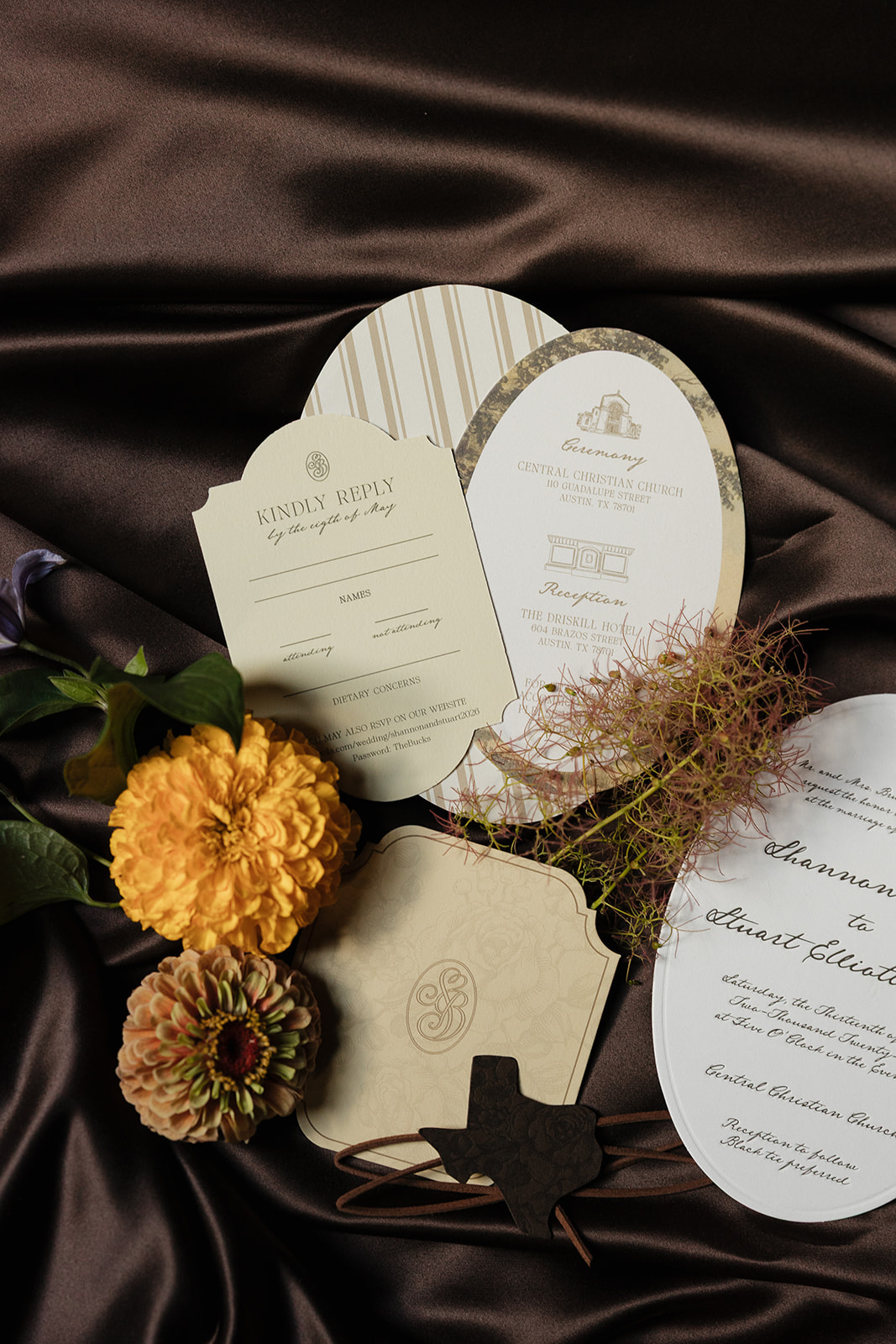
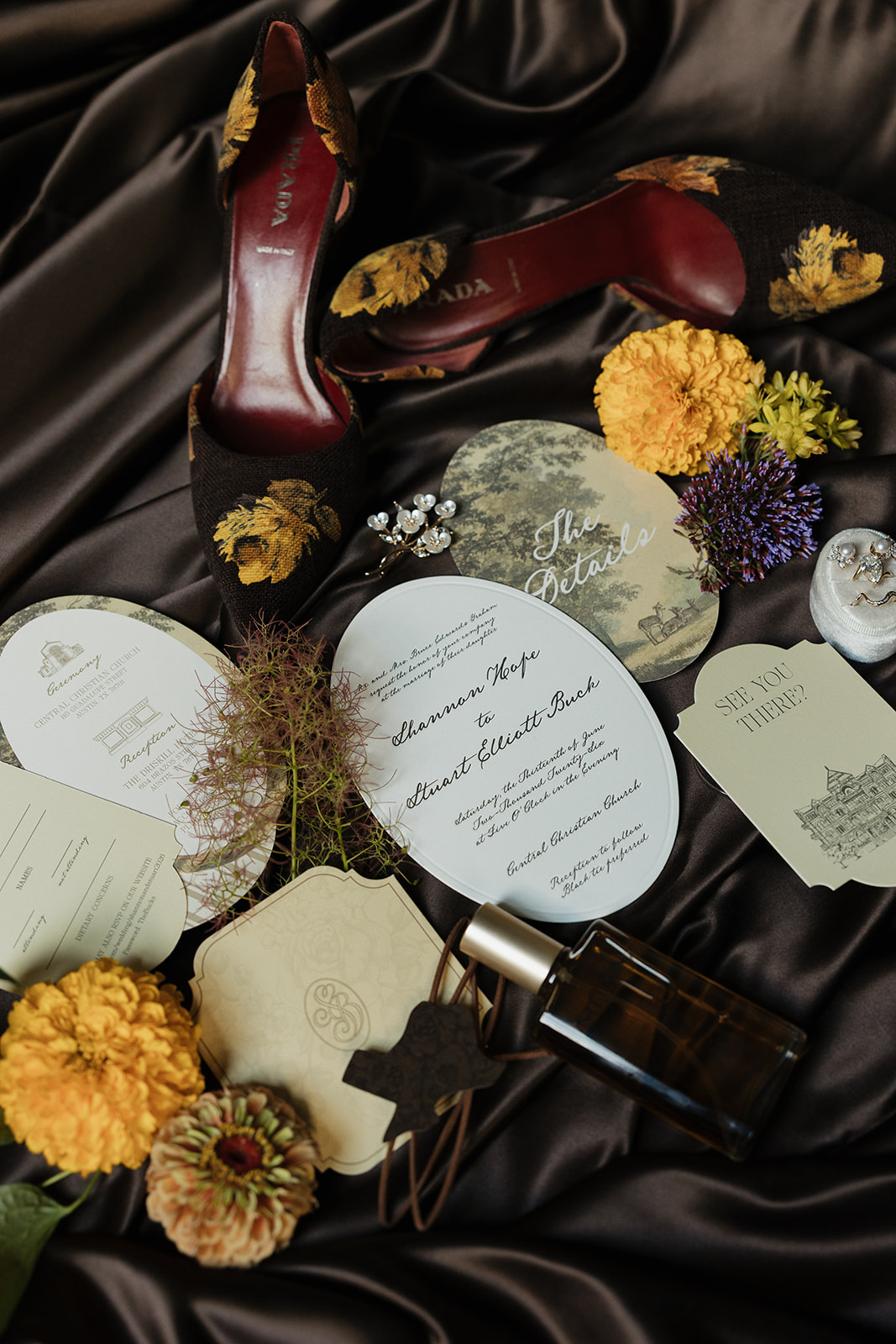
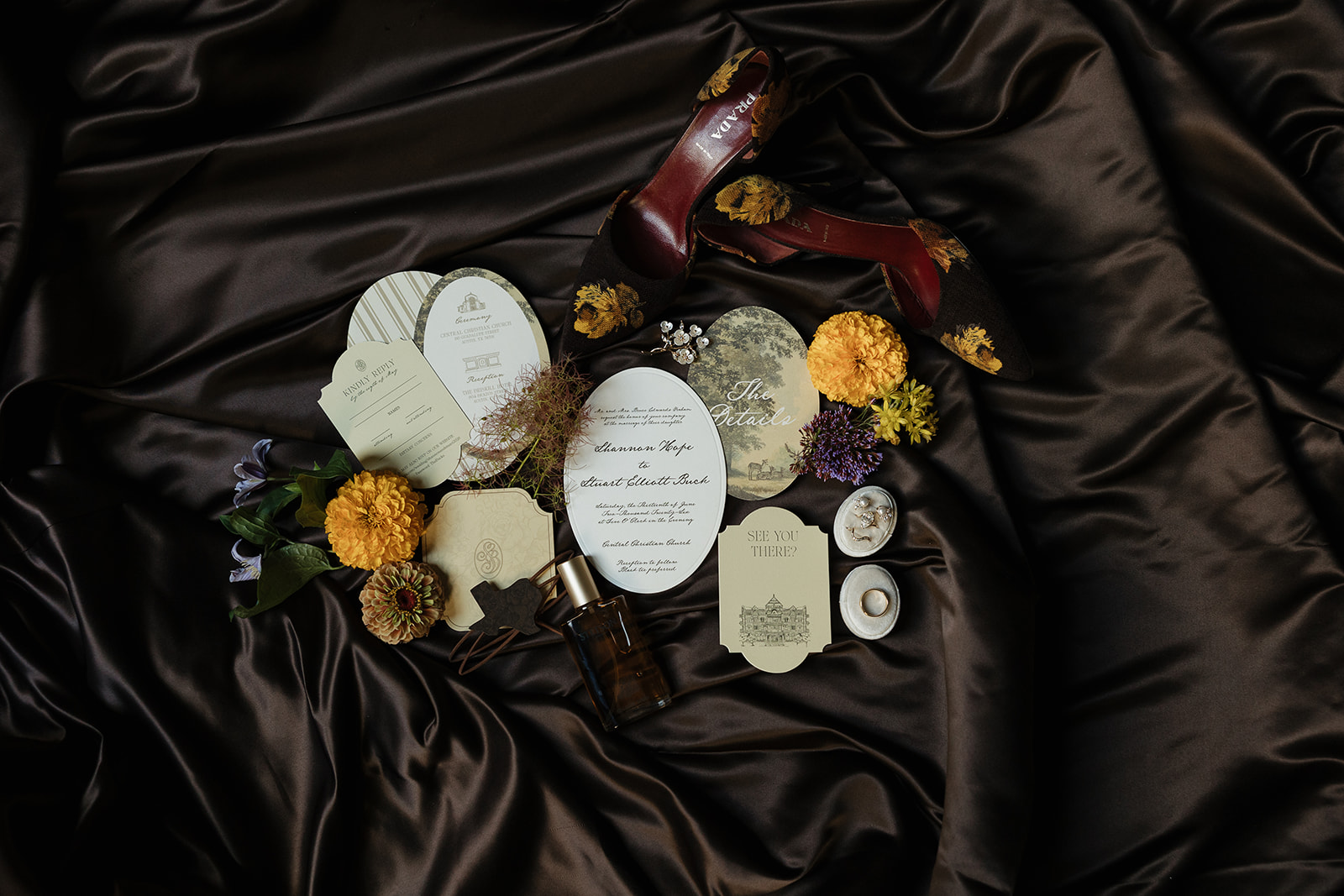
Photography by Chandler J Photography
The Finishing Touches: Belly Bands, Vellum Wraps, Wax Seals + Guest Addressing
These are the pieces that hold your suite together, and they’re where so much of the personality comes through.
Photography by Katie Elizabeth
Belly Band
A belly band is a narrow strip of paper (or sometimes fabric) wrapped around the middle of your stacked suite to keep every piece together. It can be a solid color, a pattern, or printed with your monogram. Belly band wedding invitations have a clean, tailored look, and it’s one of the simplest ways to make your suite feel finished.
Vellum Wrap
Belly band vs. vellum wrap is one I explain to couples constantly. Vellum is a translucent, frosted paper. A vellum wrap folds around your suite and covers much more of it, while still letting your invitation peek through underneath. You can print on vellum too…your names, a monogram, a small illustration. A belly band is a clean strip across the middle, while vellum wedding invitations feel a little softer and more romantic. Both hold your suite together. They just give your guests a different first impression.
Wax Seal
A wax seal is a small disc of melted wax pressed with a stamp, usually your monogram or a custom design. It can close your envelope or sit right on top of a belly band or vellum wrap. Wax seal wedding invitations have that old-world, handcrafted feel couples love. One thing to keep in mind: wax seals add thickness, which can mean extra postage, so have a fully assembled suite weighed at the post office before you buy stamps.
Guest Addressing
Guest addressing means your guests’ names and addresses are added directly to the outer envelope, so there are no stick-on labels. It’s a small step, but it makes a real difference in how polished your invitations feel the moment they arrive in the mailbox.
Photography by Lauren Nicole Photo
Printing Methods, Explained by How They Feel
This is usually where couples’ eyes start to glaze over, and I get it. 😅 Digital, letterpress, foil, embossing…they all sound similar when you’re just reading about them. So when I’m sitting with a couple, I don’t start with the technical side. I talk about texture and how each one feels in your hands.
Digital Printing (Flat Printing)
Digital printing is what we call “flat” printing. The ink sits right on the surface of the paper, so it’s smooth to the touch. It’s beautiful for watercolor artwork, illustrations, and full-color designs, and it’s typically the quickest printing method to produce.
Letterpress
So, what is letterpress printing? Your design is made into a printing plate, inked, and pressed into the paper, leaving an impression you can actually feel with your fingertips. That’s what I call “can feel” printing. Letterpress wedding invitations have a tactile, timeless quality that’s hard to replicate, and they look their best on thick, soft paper like cotton. Each ink color needs its own printing plate and its own pass through the press, which is why letterpress sits at the top of the price range. (If you’re curious how that adds up, I break it down in our stationery pricing guide.)
Foil Stamping
Foil stamping uses heat and a metal plate to press a thin layer of metallic or colored foil onto your paper. Gold, silver, copper…foil wedding invitations catch the light in a way ink just can’t. Like letterpress, foil leaves a subtle impression you can feel, so it adds both shine and texture.
Embossing vs. Debossing
These two get mixed up all the time, so here’s the easiest way to remember them. Embossing raises your design up from the paper, so it stands above the surface. Debossing presses your design down into the paper, so it sinks below it. When either one is done without ink or foil, it’s called blind embossing or blind debossing, and it’s such a refined way to add a monogram or crest.
Photography by Katie Liz Photos
White Ink
White ink is exactly what it sounds like: printing in white, usually on darker or colored paper. Picture a deep navy or forest green card with crisp white lettering. Standard printing doesn’t include white ink, so it’s a specialty step, and it’s a great option if your color palette leans moody.
Edge Painting
If there’s one finish I wish more couples asked for, it’s edge painting! This is when the edges of your card are painted in color, so when someone picks up your invitation, there’s a thin line of color framing the whole piece. It shows up best on thick card stock, and it turns a simple invitation into a beautiful statement piece.
Die-Cut (Custom Shapes)
Die-cutting is how we cut paper into a custom shape. Arches, scallops, rounded corners, or a silhouette that echoes your venue. This is basically anything outside of a standard rectangle. A die (a custom cutting tool) is made specifically for your design, which is why custom shapes cost more than standard ones.
Photography by Angelina Loreta
Paper Terms Worth Knowing
Paper is the foundation of your entire suite. Your guests will feel it before they read a single word, so it deserves more attention than most couples give it.
Paper Weight
Paper weight is how thick and sturdy your paper is. It’s usually listed in pounds (lb) or GSM, and the higher the number, the thicker the paper. My go-to for most suites is a double thick bright white card stock. It gives you the most vibrant colors and a much more luxe feel than a standard paper weight.
Cotton Paper
Cotton paper is made from cotton fibers instead of wood pulp. It’s soft, a little textured, and it takes letterpress and blind debossing beautifully because the fibers give under pressure.
Handmade and Deckled Paper
Handmade paper is made by hand in small batches, so every sheet has its own texture and character. It usually has deckled edges, which are those soft, feathery, uneven edges instead of a clean straight cut. I LOVE handmade cotton paper. Most couples don’t choose it (it’s pricey!), but it’s SO unique, and nothing else feels quite like it. If you’re drawn to handmade paper wedding invitations, it’s worth seeing in person before you decide.
Seed Paper and Recycled Cotton Paper
If eco-friendly options matter to you, we offer both. Seed paper has seeds pressed right into it, so your guests can plant it after the wedding. Recycled cotton paper gives you that soft cotton feel with a lighter footprint.
Photography by Riley Glenn
Beyond the Invitation Suite: Day-Of Wedding Stationery
Your invitation suite isn’t the only stationery your guests will see. Day-of wedding stationery is everything printed for the wedding itself, and designing it to match your invitations is what makes your whole celebration feel cohesive.
Escort Cards vs. Place Cards
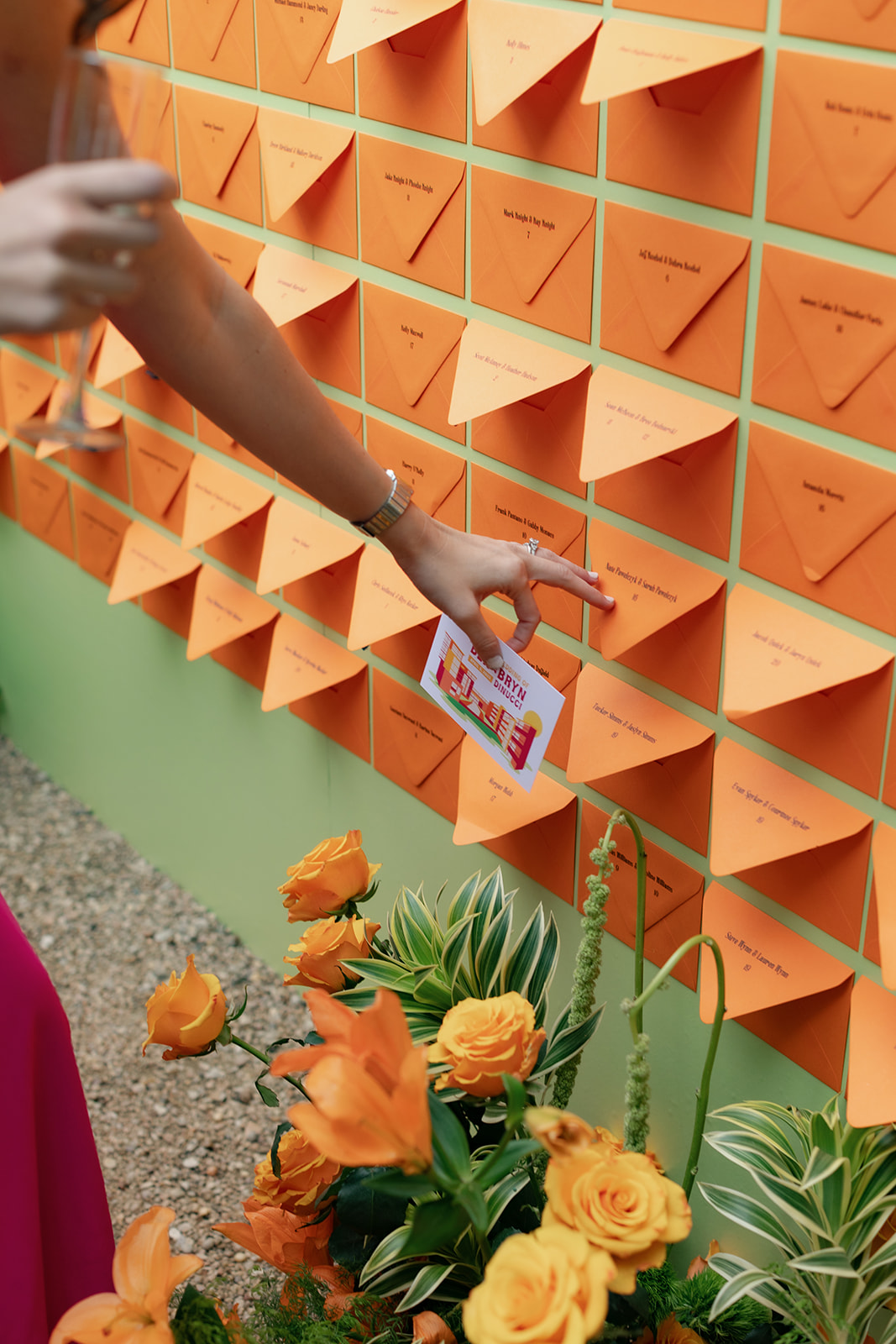
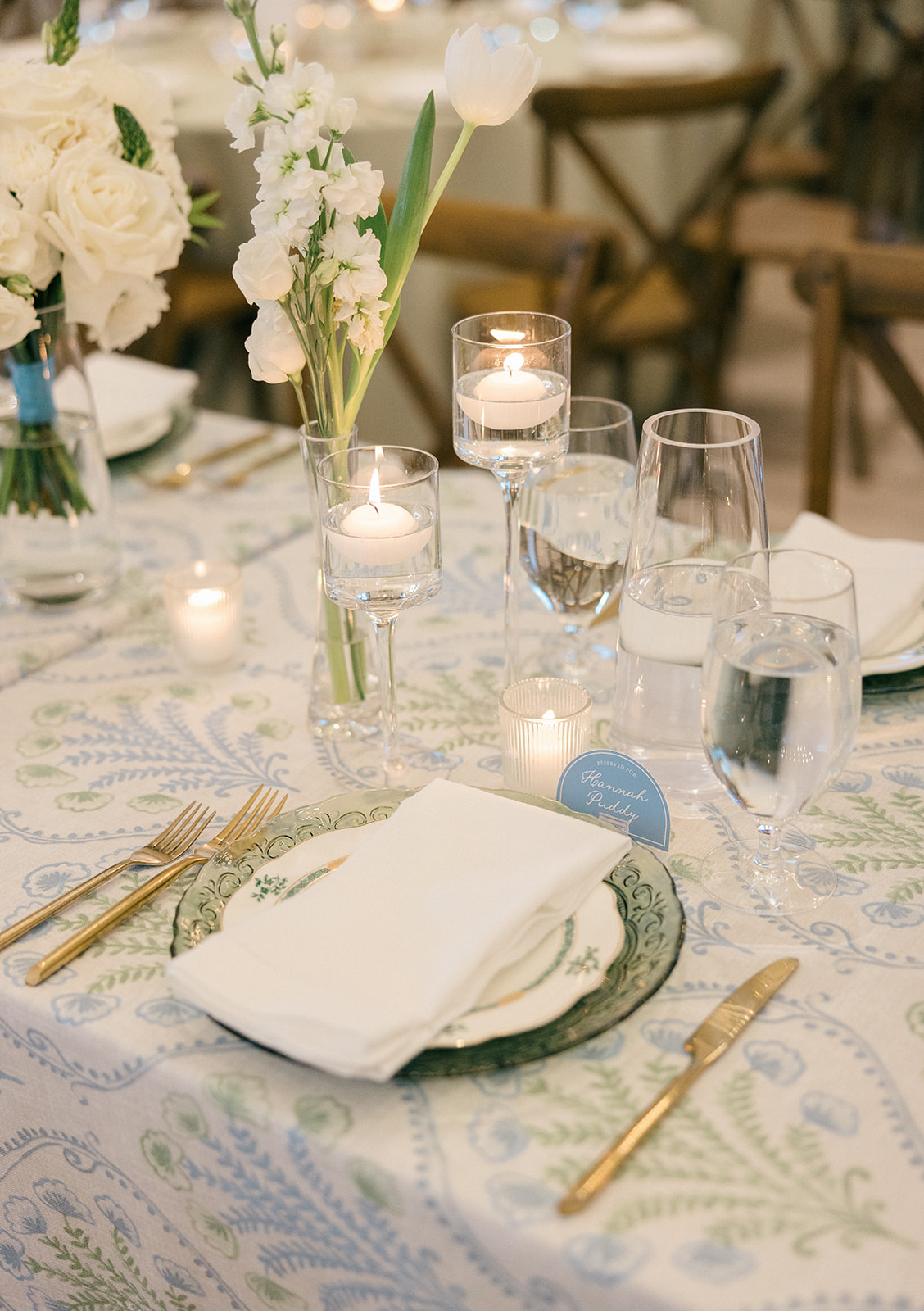
This is the other big mix-up. Escort cards tell guests which table they’re sitting at. They’re usually displayed together near the entrance to your reception, and guests grab theirs on the way in. Place cards sit at each guest’s exact seat at the table. If you’re having a plated dinner where guests chose their meal ahead of time, place cards are also how your caterer knows exactly what to serve each person.
Photography by Ruby Olivia
Photography by Main Squeeze Photography
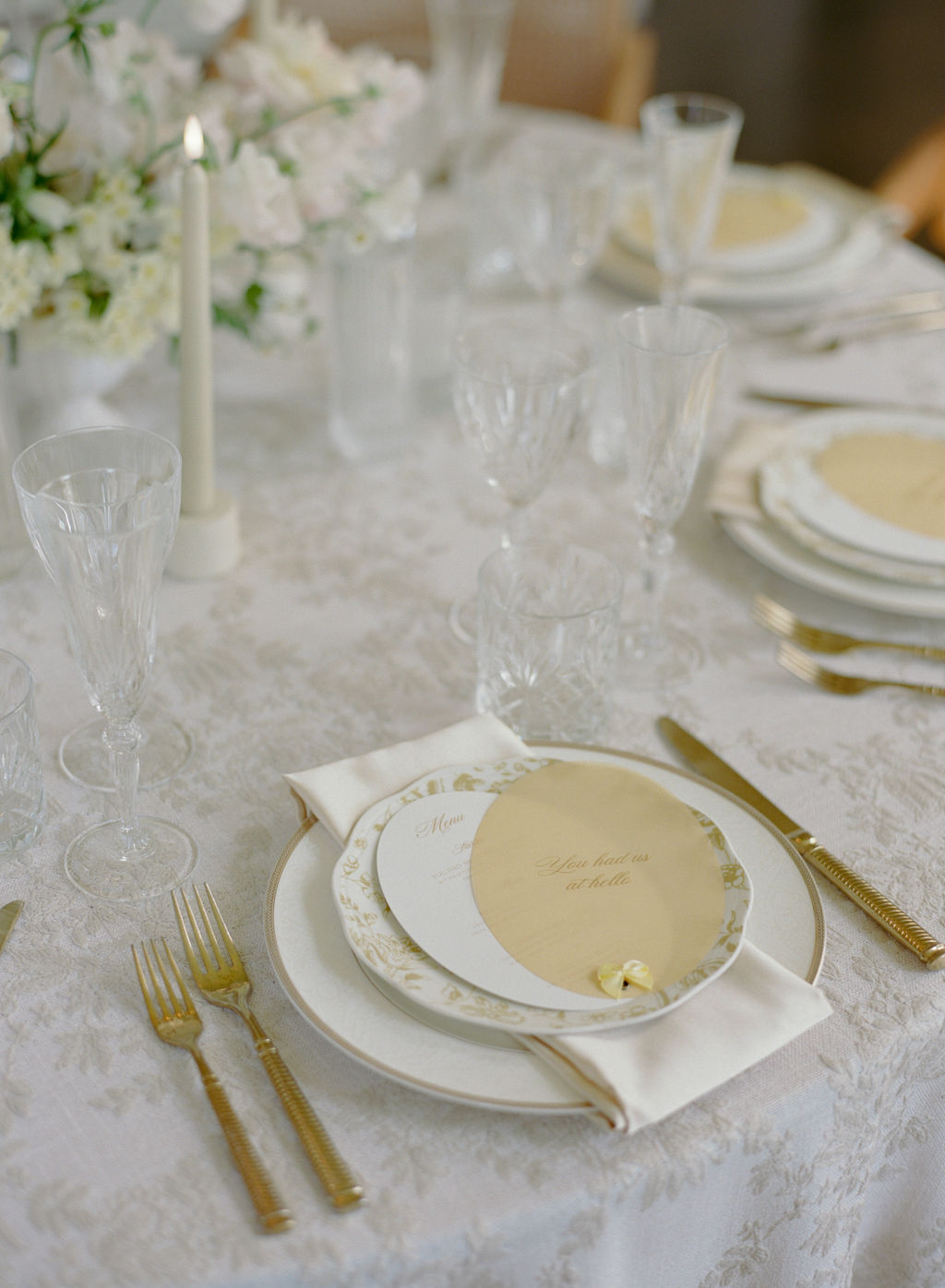
Menus
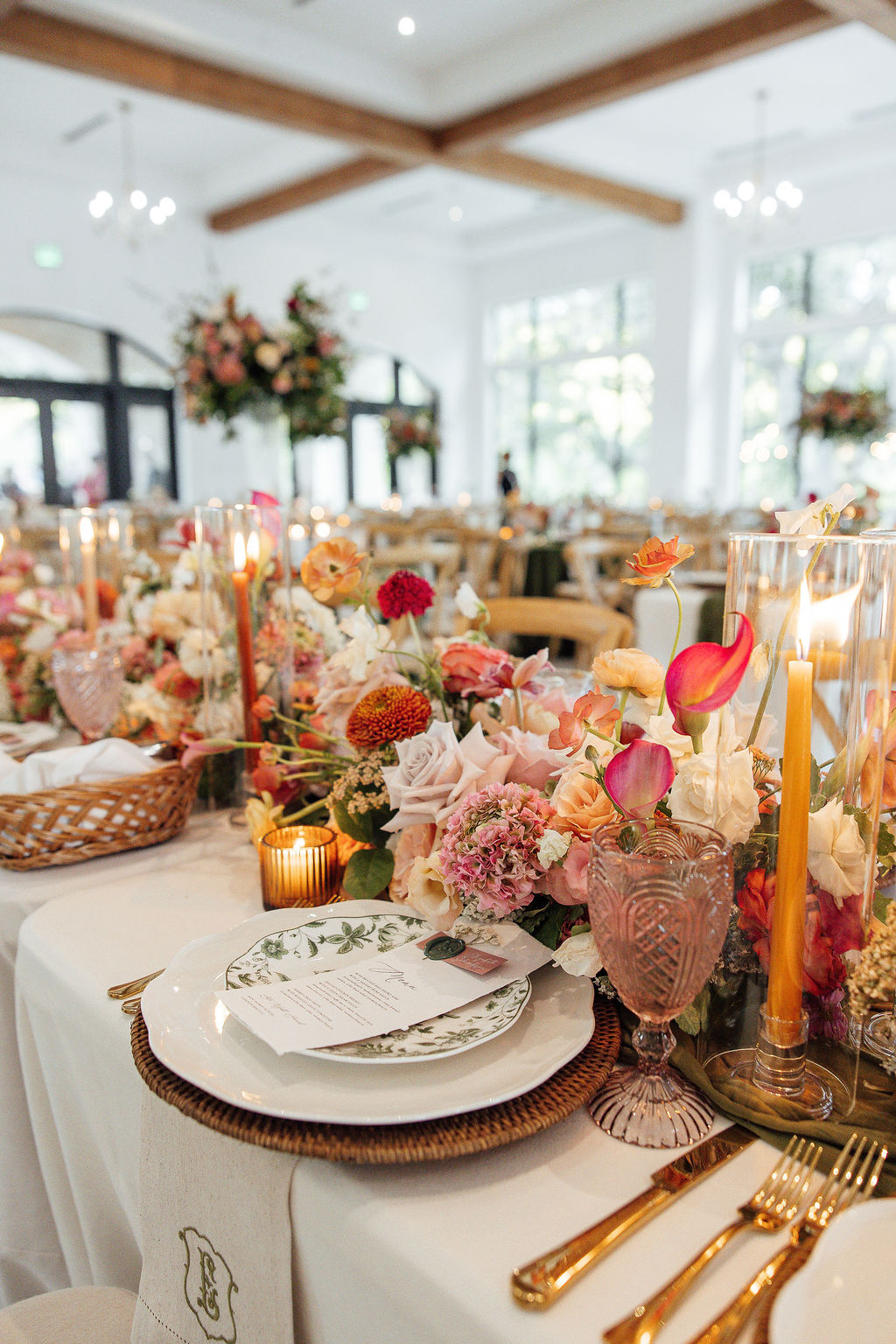
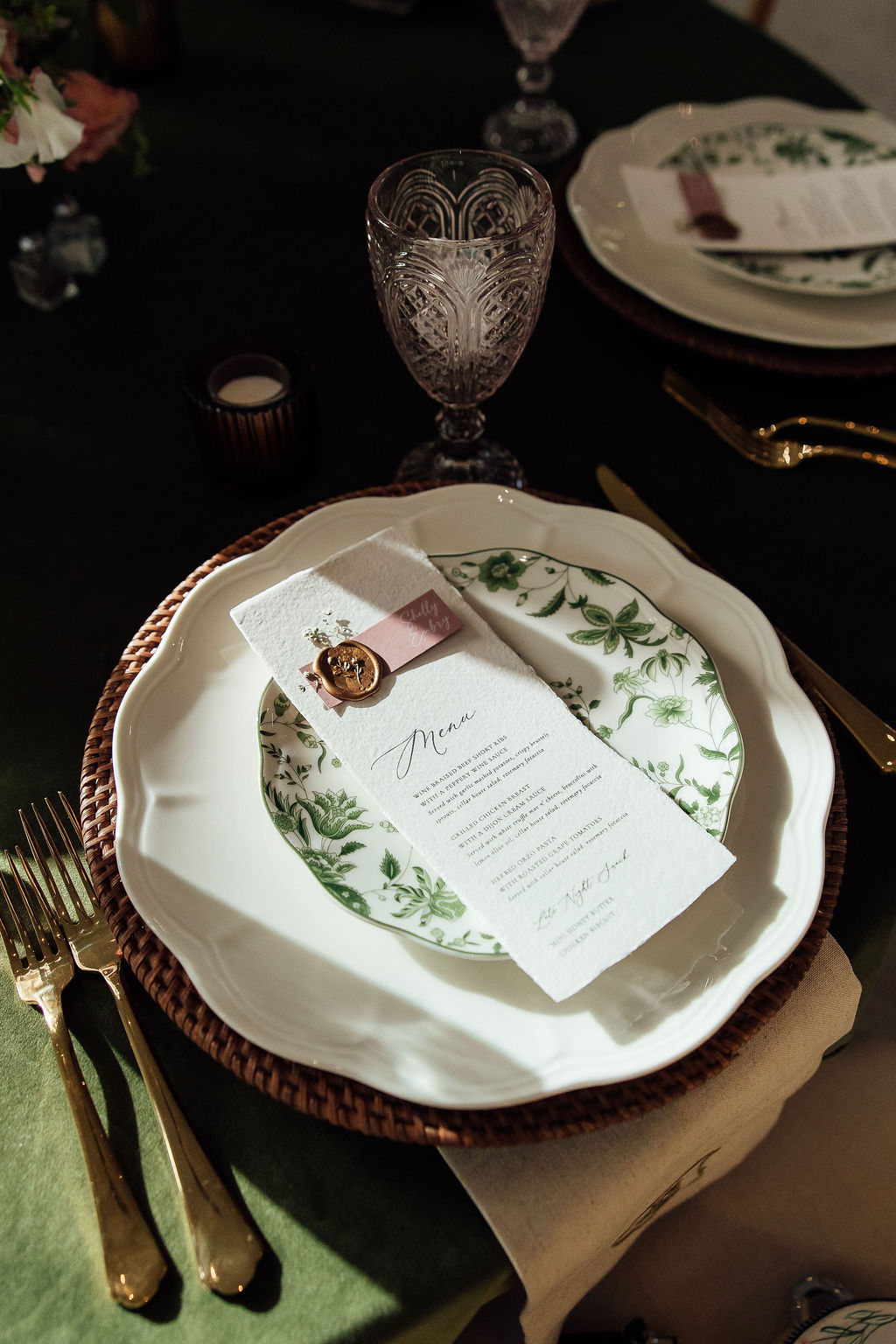
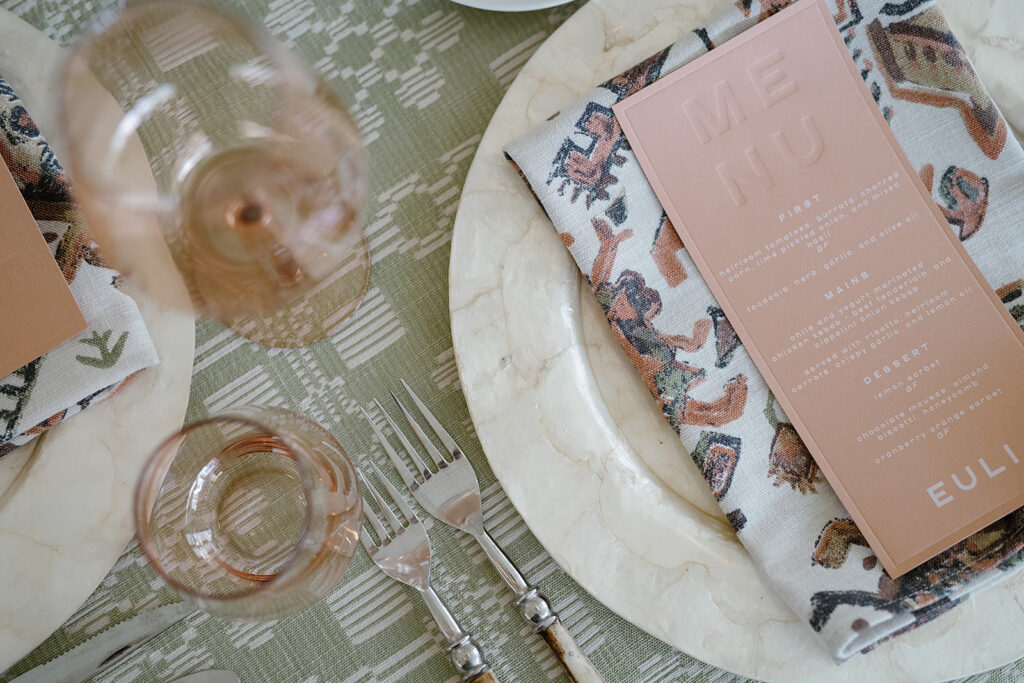
Menus let guests know what’s being served that night, and they’re one of the easiest ways to carry your invitation design right onto the table.
Photography by Tailor James
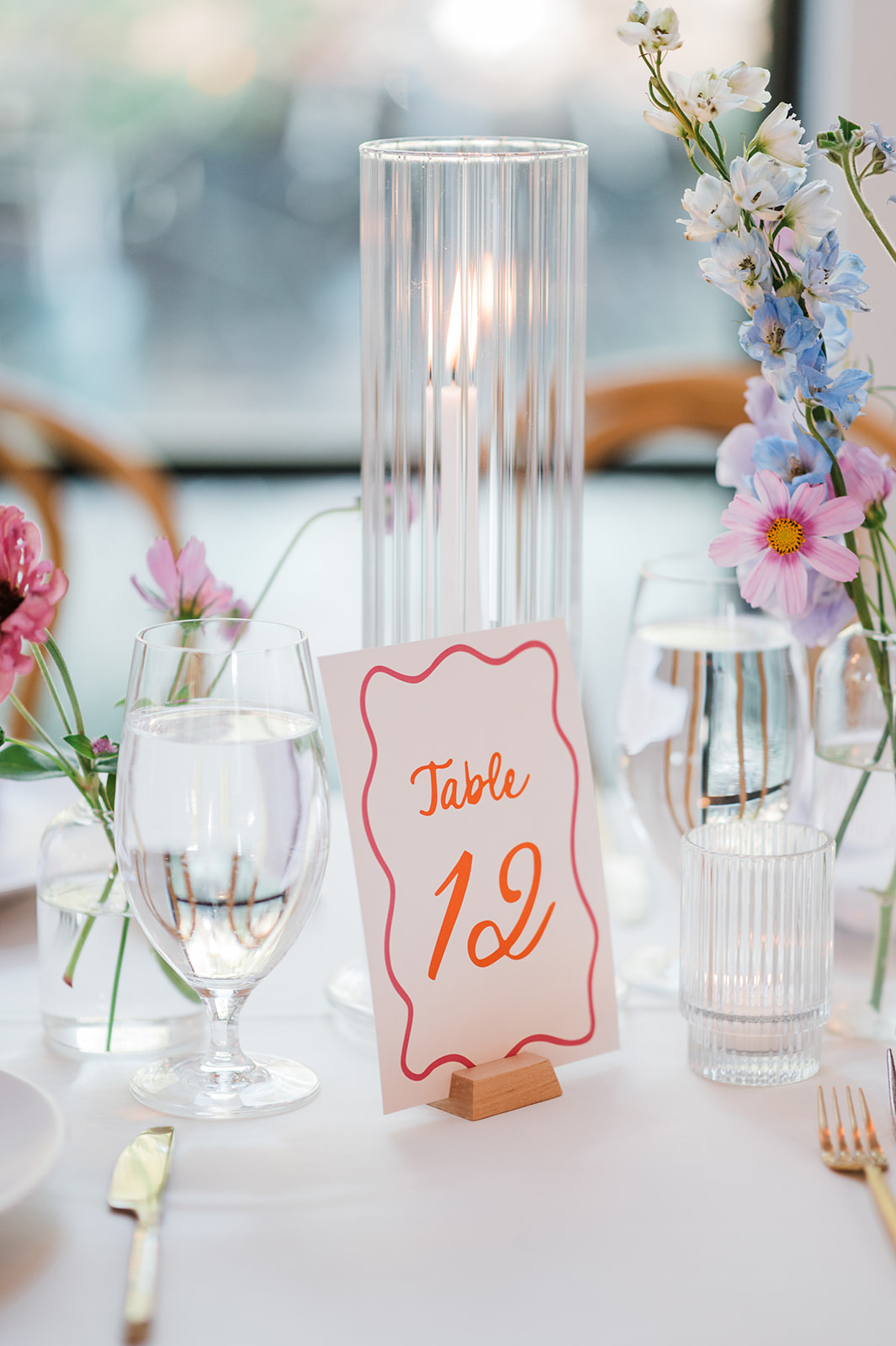
Table Numbers
Table numbers help guests find their table once they have their escort card in hand. They’re small, but they’re one of those pieces that keeps your reception running smoothly.
Photography by Carhart Photography
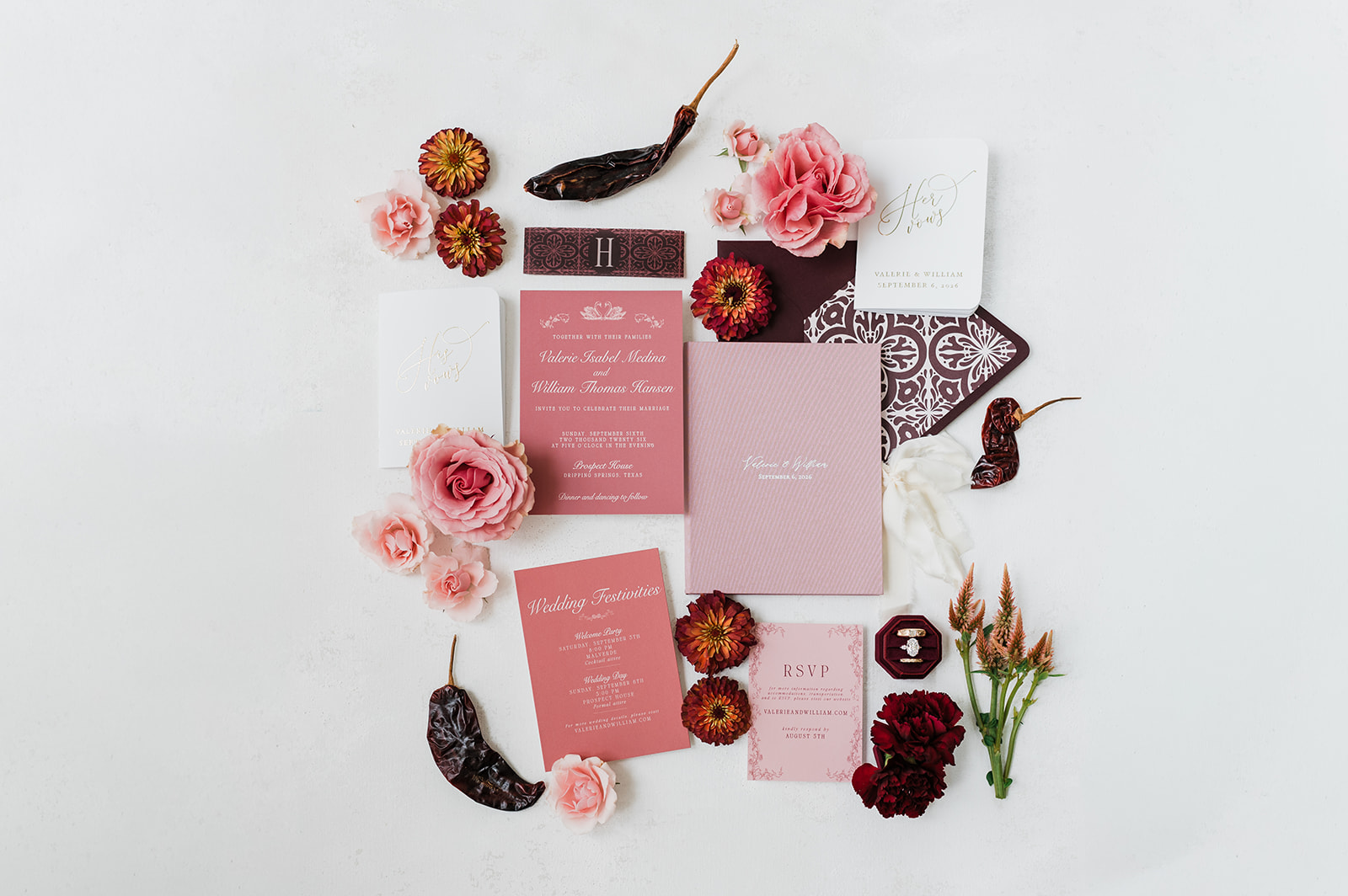
Programs
Ceremony programs walk guests through your ceremony: the order of events, your wedding party, and any readings or traditions you want to share.
And if you’re wondering about welcome signs and seating charts, those fall under signage, which is its own world. You can read all about it in How Much Does Austin Wedding Signage Cost?
Photography by Carhart Photography
From First Proof to Your Mailbox
Proof
A proof is a digital version of your stationery that you review and approve before anything goes to print. This is your chance to double-check every spelling, date, and time, because once it’s printed – it’s printed.
Assembly
Assembly is putting each suite together by hand: stacking the cards in the right order (largest on the bottom, smallest on top), wrapping, sealing, and getting every envelope ready for the mail. It’s a step couples rarely think about until they’re staring at 150 suites spread across their dining room table, and it’s one we’re happy to take off your plate.
Our Sample Box
Once you book with us, we mail you a physical sample box filled with past projects so you can touch and see everything in person. This is the best way I’ve found to help couples understand the difference between letterpress, foil, and digital printing, or between a double thick card stock and handmade cotton paper. When we sit down together, I’ll have you pick up each piece and feel it for yourself. Suddenly every term in this post makes sense. 😊
Photography by April Mae Creative
Your Wedding Invitation Suite Questions, Answered
How much does a set of custom wedding invitations cost from a design studio?
Great question, and one that comes up constantly. For us, our Digital Collection starts at $2,500, and our fully custom Signature Collection starts at $4,500. For a full stationery experience with around 150 guests, most couples invest between $6,500 and $8,500. Guest count, printing methods, and custom finishes all move that number, and our stationery pricing guide explains exactly why.
What is included in a luxury wedding invitation suite?
A luxury wedding invitation suite usually starts with the same core pieces (your invitation, details card, and envelopes), then elevates every layer. Think letterpress or foil, cotton or handmade paper, a custom envelope liner, edge painting, a vellum wrap, and a wax seal to finish it off. What makes luxury wedding invitations feel that way is how each piece is made and how it feels in your guests’ hands, more than how many pieces are in the envelope.
Where can I order samples of wedding invitation designs?
Most stationers offer some kind of sample, so it’s always worth asking. For our couples, the sample box comes after booking. We mail you a physical box of past projects so you can see and feel the paper, printing, and finishes in person before we start designing your suite.
How do I choose the right wedding stationery designer for custom invitations?
Start with their portfolio and look for range. If every suite looks the same, yours probably will too. You want someone who asks about your story and your vision instead of asking you to pick a design off a shelf, who can explain why things cost what they do, and who’s clear about timelines. Most of our couples start the process 9 to 12 months before their wedding, especially if they want letterpress or foil, so it’s never too early to reach out.
Photography by Riley Glenn
Ready to Start Your Wedding Invitation Suite?
Now that you know what is included in a wedding invitation suite (and what a deckled edge is!), the fun part starts. Tell us about your day, your love story, and the colors you keep coming back to. You don’t need to have all the answers for us to start. Submit an inquiry and let’s begin your bespoke experience together.

About Eventive Designs
Eventive Designs is a fully custom wedding stationery and signage studio based in Austin, Texas, serving the Texas Hill Country and shipping worldwide. Owner and designer Michelle has been designing custom wedding invitations since 2018 for more than 200 couples, and every suite is rooted in craftsmanship, materiality, and thoughtful design. Our work has been featured on 100 Layer Cake, Wed Society, and Equally Wed, and our white-glove process means you are never a number here, and your celebration is never templated.
✨If you’re dreaming in details, we’d love to bring them to life!


Design by Saela Studio | Photography Courtesy of Paige Vaughn Brands, Victoria Trevino Photography, Christina Pruitt, and Wild Rose Photo Studio
